 TIGERFASTENERS
The Sheet Gauge Is a Weight, and the Law Says the Thickness Is Approximate
Somebody on r/AskEngineers asked why so much of this trade is numbers rather than measurements: a number 6 screw, 14 gauge wire, schedule 40 pipe. The answers were sensible. A screw has half a dozen dimensions and one number stands in for all of them; a designation points at a whole specification with tolerances and material behind it. That is true of the screw number. Nobody in the thread went and opened the definition of any of the others, and one of them turns out not to be a length at all.
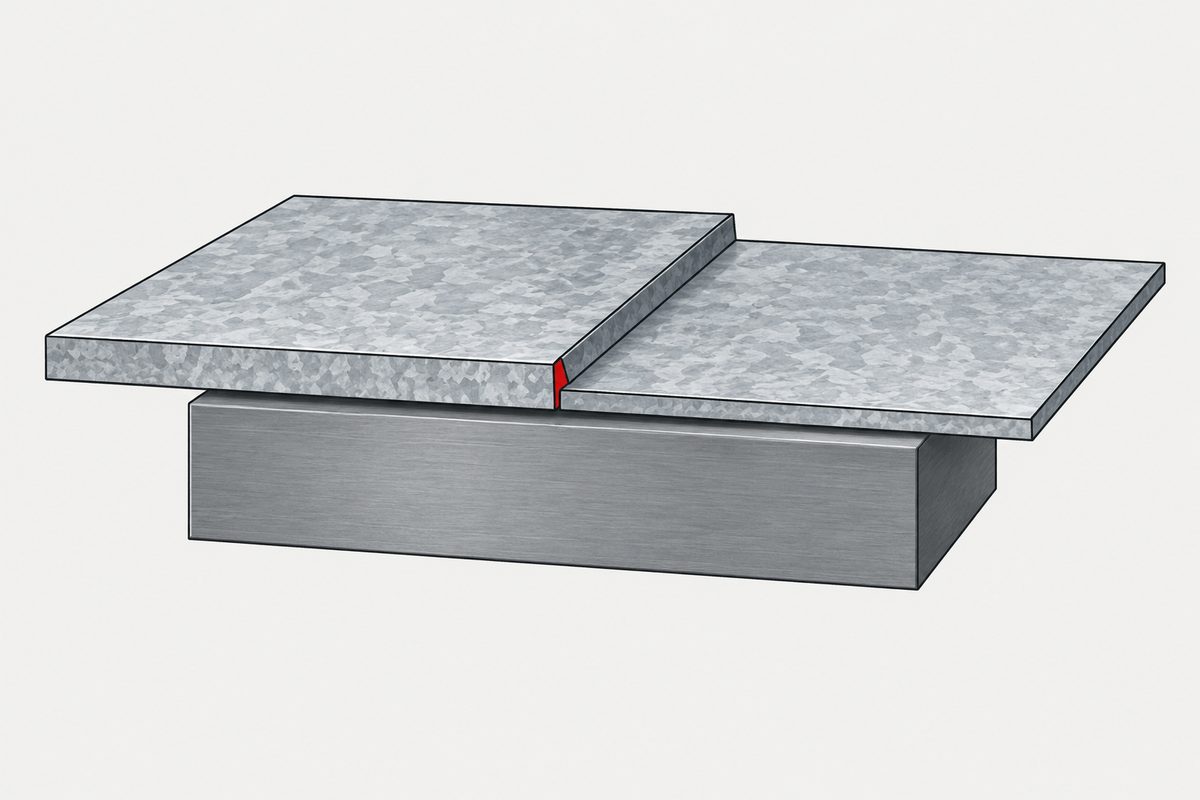
The US Standard Gauge for sheet steel is a customs statute, and in its own table the thickness columns are labelled approximate while the weight columns are not. The quantity the law actually fixes is ounces per square foot. A thickness only appears once somebody supplies a density, and the one behind that table was supplied in 1893.
The document is 15 U.S.C. § 206, Standard gauge for sheet and plate iron and steel, which came from the Act of 3 March 1893 and is still in the United States Code. It opens by saying what it is for: for the purpose of securing uniformity, the following is established as the only standard gauge for sheet and plate iron and steel in the United States of America. Then it says what that uniformity was wanted for. The same and no other shall be used in determining duties and taxes levied by the United States on sheet and plate iron and steel.
It was written for the customs house. Nothing in it is addressed to a fabricator, and a following sentence guards the scope in the direction a tax statute would: this subchapter shall not be construed to increase duties upon any articles which may be imported.
Which column is the law and which column is a courtesy
The table has columns for thickness in fractions of an inch, in decimal inches and in millimetres, and columns for weight per square foot in ounces and in pounds, and for weight per square metre. The three thickness columns each carry the word approximate in their heading. The weight columns do not.
| Gauge | Approximate thickness, fraction | Approximate thickness, decimal inch | Weight, oz per square foot | Weight, lb per square foot |
|---|---|---|---|---|
| 16 | 1/16 | .0625 | 40 | 2.5 |
| 18 | 1/20 | .05 | 32 | 2 |
| 20 | 3/80 | .0375 | 24 | 1.50 |
| 22 | 1/32 | .03125 | 20 | 1.25 |
| 24 | 1/40 | .025 | 16 | 1 |
| 26 | 3/160 | .01875 | 12 | .75 |
Read the ounces column on its own and the system stops looking arbitrary. It is a ladder in whole ounces, and the gauge numbers are just the rungs. The thicknesses that people memorise are what those weights become after a conversion, and the statute is saying so in the heading.
One number runs through every row
This is our own arithmetic on the table above and it takes a minute to repeat. Divide each weight in ounces by the decimal thickness beside it and the same figure comes back each time. Put the other way round, one ounce per square foot is one six hundred and fortieth of an inch:
| Gauge | oz ÷ 640 | Decimal inch in the statute |
|---|---|---|
| 16 | 40 ÷ 640 = .0625 | .0625 |
| 18 | 32 ÷ 640 = .05 | .05 |
| 20 | 24 ÷ 640 = .0375 | .0375 |
| 22 | 20 ÷ 640 = .03125 | .03125 |
| 24 | 16 ÷ 640 = .025 | .025 |
| 26 | 12 ÷ 640 = .01875 | .01875 |
Six rows, six exact matches. So a sheet one inch thick would weigh 640 ounces per square foot, which is 40 pounds, and a cubic foot is twelve of those, giving 480 pounds per cubic foot, or about 7 690 kg/m³. That is the density the table was built on. The statute does not print it; it falls out of the numbers.
And that density is not the metal in front of you
The conventional figure for structural steel is about 7 850 kg/m³, roughly two per cent higher than the value implied by the table. At the same weight per square foot, two per cent more density is two per cent less thickness, so a 24 gauge sheet lands nearer 0,0245 inch than the 0,025 the statute prints. That is small, it is also exactly the size of the disagreements between published gauge charts, and it is a difference in what was assumed rather than in what was measured.
Aluminium makes the same point loudly. Its conventional density is around 2 700 kg/m³, roughly a third of the implied value, so the same weight per square foot is close to three times the thickness. A weight-based gauge cannot survive that, which is why aluminium sheet is not sold on this ladder at all and has its own numbering with its own definition.
Coated sheet raises a second question the number cannot answer. If a gauge is defined by weight, then anything added to the surface is inside the weight, and the base metal underneath is thinner than the same number on bare steel. How much thinner depends on the coating designation, which is specified separately in documents we do not hold, so the honest statement is not a figure. It is that the gauge number does not contain the answer, and the coating specification is a second thing to ask for.
Why this lands on a fastener page
Because the two questions a screw asks about sheet are both asked in millimetres of base metal. What a self-drilling screw can get through and what it can then hold are two different numbers on the box, and the point at which the sheet stops being able to hold a thread at all is a thickness, not a gauge. An enquiry that says twenty gauge has named a weight per unit area of nineteenth century wrought iron and left the screw selection open.
The fix is not to stop using the word. Gauge numbers are how sheet is ordered, stocked and discussed, and abandoning them helps nobody. The fix is to put the millimetre on the drawing and let the gauge number ride along as a note, in the same way a thread is specified by its designation and the inch equivalent goes in brackets. If the sheet is coated, say which coating, because that is the part the number was never carrying.
Three numbers in one question, three different kinds of number
The thread put a screw number, a wire gauge and a pipe schedule in one sentence, and they are not the same sort of thing. The machine screw number is the friendliest of the three: it is a straight line, a fixed starting diameter plus a fixed increment per number, which is why the near-misses against metric sizes fall where they do. The sheet gauge is the weight ladder above. Wire gauge and pipe schedule are separate conventions again, with their own definitions in their own documents, and the reply in the thread about a designation standing in for a whole specification is the right instinct for all three.
The instinct that goes wrong is the next step, treating the number as though it were a measurement that somebody rounded. On the sheet gauge it is the reverse. The number is the exact quantity and the measurement is the approximation, and the statute prints that word in the column heading so nobody has to guess which is which.
Somebody did propose getting rid of the numbers. In 1857 Whitworth asked engineers to suppress the gauge designations and simply call the sizes by their thousandths of an inch. The numbers outlived him.
This is not one of the six steps. It shows up across them, or after assembly. Where the decisions that lead here were made is in specifying a screw, which sets out the order and why doing it out of order is rework.
Common questions
Is a sheet metal gauge number a thickness?
Not in the document that defines it. The US Standard Gauge is set out in 15 U.S.C. section 206, and in its table the thickness columns in fractions of an inch, decimal inches and millimetres are each headed approximate, while the weight columns in ounces and pounds per square foot are not. The quantity the statute fixes is weight per unit area. A thickness appears only after a density is assumed.
Why do published gauge charts disagree slightly?
Because they are conversions of a weight, and a conversion needs a density. Our arithmetic on the statutory table gives one ounce per square foot as one six hundred and fortieth of an inch across every row we could read, which implies about 7 690 kilograms per cubic metre. The conventional figure for structural steel is nearer 7 850, about two per cent higher, and two per cent is roughly the size of the disagreements between charts.
Why does aluminium sheet use a different gauge system?
Because a gauge defined by weight cannot be carried between metals of different density. Aluminium is conventionally around 2 700 kilograms per cubic metre against the roughly 7 690 implied by the steel table, so the same weight per square foot is close to three times the thickness. Aluminium sheet therefore has its own numbering with its own definition rather than borrowing this one.
Does a gauge number tell me the thickness of galvanised sheet?
It does not settle it. A gauge defined by weight per unit area counts whatever is on the surface, so the base metal under a coating is thinner than the same number on bare sheet. How much thinner depends on the coating designation, which is specified in separate documents. The practical answer is to ask for the base metal thickness in millimetres and the coating specification as two separate items.
What should a drawing or an enquiry say instead?
Put the thickness in millimetres and let the gauge number ride along as a note. Gauge numbers are how sheet is ordered and stocked, so there is no reason to drop them, but the screw questions are asked in millimetres of base metal: what a self-drilling point can get through, and how much thread the sheet can engage once it is through. Add the coating specification if the sheet is coated.
Was the standard gauge written for manufacturing?
It was written for customs. The statute states that it is established for the purpose of securing uniformity, and that the same and no other shall be used in determining duties and taxes levied by the United States on sheet and plate iron and steel. A further sentence limits the effect on duties. Nothing in it is addressed to a fabricator, which is worth knowing before treating it as a manufacturing tolerance.
References
- 15 U.S.C. § 206 — Standard gauge for sheet and plate iron and steel. The purpose sentences, the duties and taxes sentence, and the table with its column headings
- The same section in the printed United States Code, used here to read the statutory language and the source note, Act of March 3, 1893, ch. 221, sec. 1, 27 Stat. 746
- r/AskEngineers — the thread this began in, on why the trade runs on numbers rather than measurements
The statute was read in two places, the current section on the Cornell site and the printed United States Code text on govinfo, and the quoted language and the column headings come from those readings. The relationship between one ounce per square foot and one six hundred and fortieth of an inch is our own arithmetic on the six table rows we could read, not a sentence in the statute, and the implied density of about 7 690 kilograms per cubic metre follows from it rather than being printed anywhere. The comparison figures of 7 850 for structural steel and 2 700 for aluminium are conventional values, not statutory ones, and are used only to show the direction and rough size of the effect. No thickness chart for galvanised, stainless or aluminium sheet is reproduced here, because those come from material standards we do not hold, and for the same reason no figure is given for how much a coating changes the base metal thickness. Wire gauge and pipe schedule are named as separate systems and no values from either are quoted. The machine screw number formula is on our earlier page rather than repeated here.
Enquiries
For sheet metal screws the useful thing to send is the base metal thickness in millimetres, the material, and the coating specification if there is one. A gauge number alongside is helpful for identifying stock and does not replace the millimetre, because what the screw has to get through and what it then has to hold are both answered in base metal.
Request a quotation
Tell us the part and the quantity. We will come back on feasibility, lead time and price.
Or email us directly sales@tigerfasteners.com