 TIGERFASTENERS
There Is No Aviation Approved Thread Repair, and the Rule Says Why
A maintenance machinist wrote a rant about people telling the shop floor that a particular thread repair was fine because it was the only aviation approved one. Five hundred and nine upvotes, eighty one replies. He corrects half of the claim himself in the next line. The other half is more interesting, and it is settled by a regulation that is four hundred words long and free to read: approval is not something a repair method has.
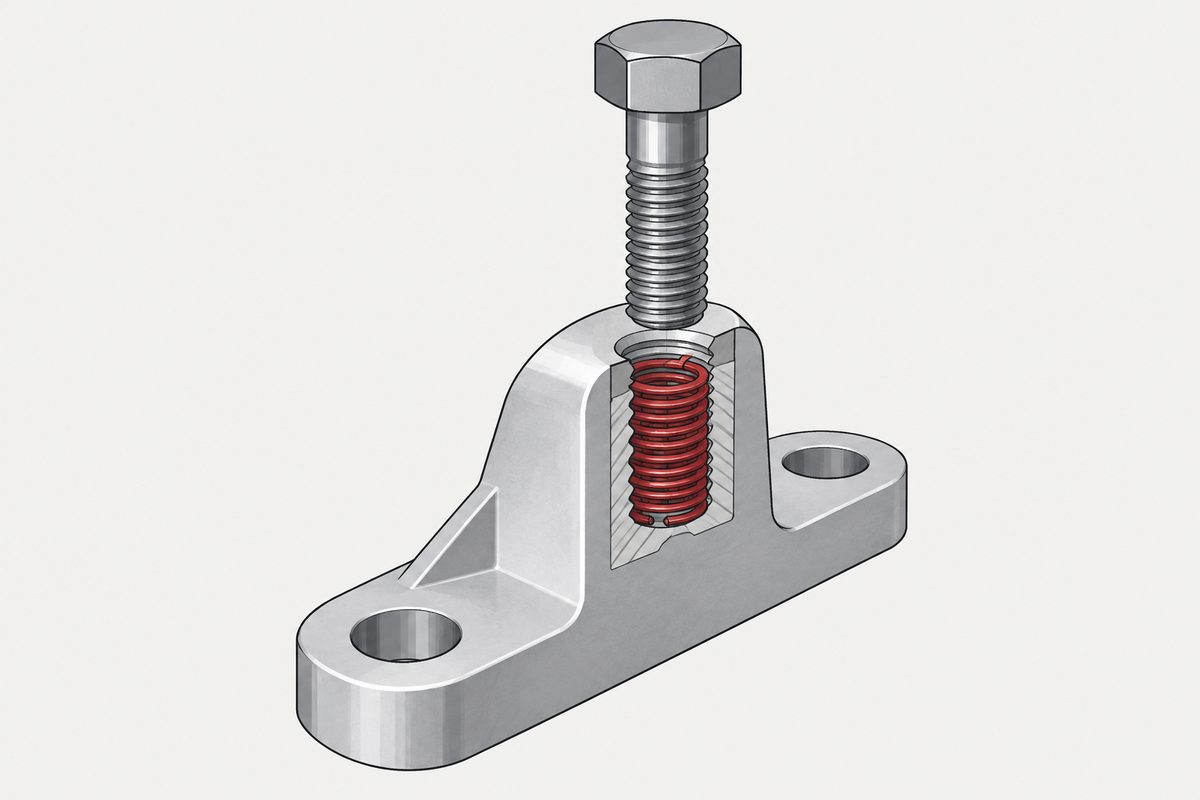
14 CFR 43.13(b) requires that work be done so that “the condition of the aircraft, airframe, aircraft engine, propeller, or appliance worked on will be at least equal to its original or properly altered condition”, with regard to aerodynamic function, structural strength, resistance to vibration and deterioration, and other qualities affecting airworthiness. That is the test. It is about the state the part ends up in, not about which technique got it there.
This is a United States regulation for civil aircraft. It binds nobody outside that, and nothing on this page is a rule for a machine shop, a car or a building. We are not saying any thread repair is unapproved, and we are not saying any of them is good or bad. This page is about what one word means in the document people cite when they use it.
We also do not comment on the repair in the forum post, and no product brand is named here.
The claim, and the half the poster already corrected
The rant is short and its target is a sentence other people keep saying. Two lines from it carry the argument.
“I don’t care if ‘its the only aviation approved thread repair’, we DO NOT work in aviation.”
“As well as they are not the only aviation approved thread repair, several other styles are as well.”
So the poster has already dealt with the word only. What neither line questions is the word approved, and that is where the documents have something to say.
The regulation that governs this is section 43.13 of title 14 of the Code of Federal Regulations, headed Performance rules (general). It is three paragraphs. It never names a repair technique, and it has no list of approved ones.
What the rule actually requires
Paragraph (a) sets a hierarchy rather than a catalogue. Each person performing maintenance “shall use the methods, techniques, and practices prescribed in the current manufacturer’s maintenance manual or Instructions for Continued Airworthiness prepared by its manufacturer, or other methods, techniques, and practices acceptable to the Administrator”.
Read the shape of that. The manufacturer’s instructions come first. Everything else arrives as acceptable to the Administrator, which is a status a method can hold in general but which paragraph (b) then makes conditional on the result.
Paragraph (a) also has a smaller rule inside it that is easy to skip: if special equipment or test apparatus is recommended by the manufacturer, that person “must use that equipment or apparatus or its equivalent acceptable to the Administrator”. The tooling is not a suggestion either.
And paragraph (c) adds a third route, which is the one most large operators are actually working under: the methods in the maintenance manual of an air carrier or an operator certificated under part 121 or 135 “constitute acceptable means of compliance with this section” unless the Administrator says otherwise. So the same repair can be acceptable at one operator through its own manual and go through a different door somewhere else.
Being in the advisory circular is not being approved
The document people usually mean when they say aviation approved is the FAA advisory circular on acceptable methods, techniques and practices. Its first paragraph is unusually careful, and it disqualifies the phrase by itself.
“This advisory circular contains methods, techniques, and practices acceptable to the Administrator for the inspection and repair of nonpressurized areas of civil aircraft, only when there are no manufacturer repair or maintenance instructions. This data generally pertains to minor repairs. The repairs identified in this AC may only be used as a basis for FAA approval for major repairs.”
It may be used as approved data only when “a. the user has determined that it is appropriate to the product being repaired; b. it is directly applicable to the repair being made; and c. it is not contrary to manufacturer’s data.”
Count the qualifications, which is our counting rather than the document’s. One precondition: only when the manufacturer is silent. Then three conditions before the data counts as approved data at all, and the third of them is that it must not contradict the manufacturer. A method does not carry approval around with it. Approval attaches to a repair, on a product, with data behind it.
What the circular says about thread inserts
Nothing. We searched the whole of it, six hundred and forty six pages.
helicoil: 0. heli-coil: 0. helical: 0. thread insert: 0. screw thread insert: 0.
The word coil appears on forty one lines. We read all of them. Every one is electrical or magnetic: test coils in eddy current inspection, magnetising and demagnetising coils in magnetic particle inspection, solenoid and relay coils, and cable being coiled.
Absence is not disqualification, and we want to be exact about that. Thread inserts have their own specifications and part numbers and are used in aviation. What the search shows is narrower and more useful: the document that the phrase aviation approved usually gestures at does not contain the subject at all, so it cannot be the source of the claim.
There is one place the circular does mention damaged threads, and it is worth reading because of what it asks for. The phrase appears twice, both in the oxygen system chapter, and both times as a reject criterion. Examine all parts for cracks, nicks, damaged threads or other apparent damage. And: “Remove from service any cylinders that show signs of abuse, dents, bulges, cracks, distortion, damaged thread, or defects which might render them unsafe.” Where this document names a damaged thread, it is telling you to take the part out, not how to save it.
The four qualities, and the one that matters here
Back to paragraph (b), which is where the question a machinist actually cares about lives. The repaired condition must be at least equal to the original in four named respects.
- Aerodynamic function
- Structural strength
- Resistance to vibration
- Deterioration
And then a catch-all: and other qualities affecting airworthiness. Three of the four are what anyone would guess. The third one is the one that decides thread repairs and almost never gets mentioned in the argument about them. A repaired thread that is as strong as the original in a pull test has satisfied one of the four. Whether it holds preload through vibration for as long as the original did is a separate question, and the rule asks it explicitly.
This site has looked at the two halves of that elsewhere: at what the things people reach for to fill a stripped thread are actually measuring, and at why an insert is a change to the joint rather than a patch on it. Neither of those pages is about the word approved, and neither is repeated here.
What to take from it
- The regulation never approves a method. It requires the manufacturer’s instructions, or other methods acceptable to the Administrator, and then judges the result
- The test is the condition of the part afterwards, at least equal to original in aerodynamic function, structural strength, resistance to vibration and deterioration
- Resistance to vibration is one of the four, and it is the one a thread repair argument usually skips
- Being in the advisory circular is not approval. Its contents are acceptable only when the manufacturer is silent, and count as approved data only if appropriate, directly applicable and not contrary to manufacturer’s data
- An operator’s own maintenance manual is an acceptable means of compliance, so the same repair can be reached by different routes at different organisations
- The circular does not mention thread inserts at all, in six hundred and forty six pages, which means it is not the source of the claim. It does not mean the inserts are unapproved
- Where it does name a damaged thread, it says remove the part from service
- None of this is a rule outside United States civil aviation, which was the poster’s point in the first place
The rant was right that the sentence was being used badly. It was right that the repair in question is not the only one. And the part it did not get to is the part worth carrying into any industry: a method does not arrive approved. A finished repair on a particular part, judged against the condition it started in, is the only thing that can be.
This page covers step 6, the documentation. The whole order is substrate, thread, head, drive, finish, documentation, and why doing it out of order is rework rather than a tweak is in specifying a screw.
Common questions
Is there such a thing as an aviation approved thread repair?
Not as a property of the method. Title 14 of the Code of Federal Regulations, section 43.13, requires the methods in the manufacturer’s maintenance manual or instructions for continued airworthiness, or other methods acceptable to the Administrator, and then requires that the repaired condition be at least equal to the original. It names no repair techniques and lists no approved ones.
What does the regulation actually measure?
The condition of the part afterwards. Paragraph (b) requires the work to be done so that the condition of the aircraft, airframe, engine, propeller or appliance will be at least equal to its original or properly altered condition, with regard to aerodynamic function, structural strength, resistance to vibration and deterioration, and other qualities affecting airworthiness.
Does being in the FAA advisory circular make a repair approved?
No. Its own first paragraph says its contents are acceptable to the Administrator only when there are no manufacturer repair or maintenance instructions, that the data generally pertains to minor repairs, and that it may be used as approved data only if the user has determined it is appropriate to the product, it is directly applicable to the repair, and it is not contrary to the manufacturer’s data.
Does the advisory circular cover thread inserts?
We searched the whole document, 646 pages. The words helicoil, heli-coil, helical, thread insert and screw thread insert do not appear. The word coil appears on forty one lines and every one of them is electrical or magnetic. That does not mean thread inserts are unapproved in aviation; it means this document is not the source of the claim.
What does the circular say about damaged threads?
The phrase appears twice, both in the oxygen system chapter and both as reject criteria. One instruction is to examine all parts for cracks, nicks, damaged threads or other apparent damage. The other is to remove from service any cylinders showing abuse, dents, bulges, cracks, distortion, damaged thread or defects which might render them unsafe.
Why does resistance to vibration matter for a thread repair?
Because it is one of the four qualities the regulation names, and a repair can pass a strength check while behaving differently under vibration. The rule asks for the repaired condition to be at least equal to the original in all four, not in whichever one is easiest to demonstrate.
Can an operator use its own maintenance manual instead?
Paragraph (c) says that unless the Administrator notifies otherwise, the methods in the maintenance manual of an air carrier, or an operator certificated under part 121 or 135, constitute acceptable means of compliance with the section. So the same repair can be reached by different routes at different organisations.
Does any of this apply to a machine shop?
No, and that was the forum poster’s own point. Title 14 governs United States civil aircraft. Nothing here is a rule for a machine shop, a vehicle or a building, and this page gives no repair advice of any kind.
Which thread repair should be used then?
This page does not answer that and does not try. It takes no position on any repair method, names no product, and comments on no repair. What it establishes is that the phrase aviation approved does not settle the question, because approval attaches to a repair on a product with data behind it rather than to a technique.
References
- 14 CFR 43.13, Performance rules (general). Read in full from the Electronic Code of Federal Regulations, edition of 27 August 2026
- FAA AC 43.13-1B with Change 1, 646 pages. The purpose statement, and a full-text search of the document
- r/Machinists, where a rant about thread repair turned on the phrase aviation approved
14 CFR 43.13 was read in full from the Electronic Code of Federal Regulations, the edition dated 27 August 2026; the section was last amended by Amendment 43-63, 90 FR 35211, 24 July 2025. This is a United States regulation covering civil aircraft and it binds nothing else. Nothing on this page is a rule for a machine shop, a vehicle or a building, and no repair advice is given. AC 43.13-1B was downloaded in full from the FAA. This site used other chapters of the same circular for locknut reuse and safetying; what is used here is its purpose statement and a search of the whole text, and nothing from those pages is repeated. The following are our own searching and counting, not statements by either document: that helicoil, heli-coil, helical, thread insert and screw thread insert return no occurrences in the circular; that the word coil appears on forty one lines, all of which we read and all of which are electrical or magnetic; that the phrase damaged thread appears twice and both times as a reject criterion; and the count of one precondition and three conditions attached to using the circular as approved data. Absence from this document does not mean a thread insert is unapproved in aviation. Inserts have their own specifications and part numbers and are used; what the search shows is that this circular is not the source of the claim being repeated. We take no position on whether any thread repair method is appropriate, we name no product brand, and we do not comment on the repair described in the forum post. Section 43.16, the rest of 14 CFR part 43, AC 43.13-2B, and the NASM, MS and NAS insert specifications have not been read, and no part number appears on this page. We read the forum post and not its replies. What fills a stripped thread and why an insert changes the joint are covered on two earlier pages and are not repeated here.
Enquiries
If a print or a specification tells you a fastener or a repair is approved, the useful question is approved by whom, for what product, and against what data. Send us the requirement rather than the adjective and we will tell you what we can supply against it, and what we would need in writing from you first.
Request a quotation
Tell us the part and the quantity. We will come back on feasibility, lead time and price.
Or email us directly sales@tigerfasteners.com