 TIGERFASTENERS
The Airworthiness Rule for Fasteners Turns on Loss, Not on Failure
Most fastener requirements are about strength: a proof load, a grade, a minimum tensile. The rule that governs fasteners in the airworthiness standards for large aeroplanes is not. It asks a different question entirely, and asks it twice. Not what happens if the fastener breaks. What happens if it is no longer there.
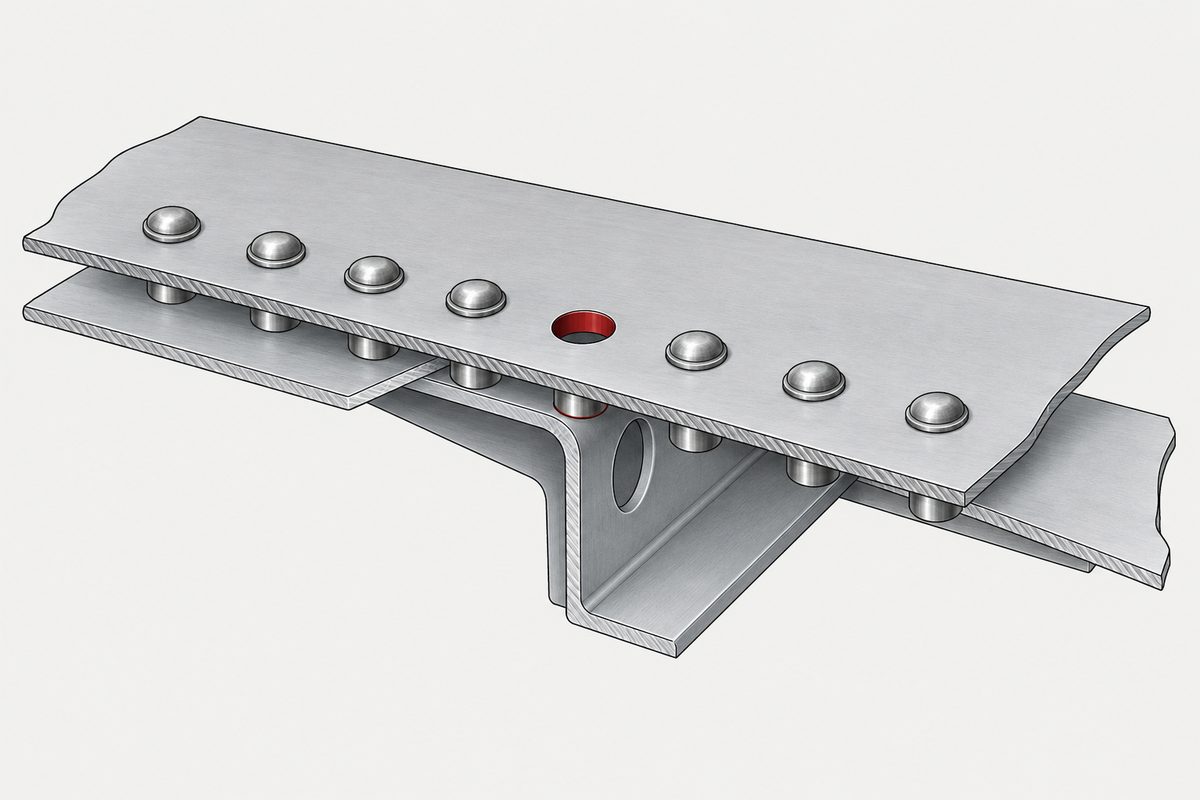
The rule requires two separate locking devices if “its loss could preclude continued flight and landing within the design limitations of the airplane using normal pilot skill and strength”, or if “its loss could result in reduction in pitch, yaw, or roll control capability” below what another subpart requires. Both triggers are about loss.
This is an aircraft certification rule and this page is not aviation guidance. This site is not an aerospace qualified supplier, and nothing here should be carried to a certification decision; the rule is quoted for how it reasons. It did not come from a forum question; it comes from the coverage queue, and from deliberately changing source after five consecutive articles from the same standards publisher. The browser tooling we normally use remains unavailable.
Which text, and a cross check we could finally do
The rule is 14 CFR 25.607, headed simply Fasteners, in the design and construction subpart of the airworthiness standards for transport category aeroplanes.
We read it twice, from two independent publications, and they agree word for word. One is the annual edition published by the Government Publishing Office, whose date field reads 1 January 2025. The other is the current electronic edition, as in force on 24 August 2026. This is the first time this site has been able to cross check a federal regulation against two editions. On an earlier page the electronic service was down entirely, and on the one after it only a single version could be obtained. Both of those said so; this one can say the opposite.
We read only this subpart. The subpart that paragraph (a)(2) points at is not read here, so this page does not say what control capability it requires. We read no advisory circular, no technical standard order and no industry or military specification.
Loss, not failure
Read the two triggers again and notice what is absent. There is no load in them. No grade, no diameter, no proof stress, no safety factor. The question is what the aeroplane does if the fastener is not there any more.
That is a different failure mode from the one fastener specifications are usually written around. A bolt that breaks has been overloaded, or fatigued, or embrittled, and the remedies are all about strength and material. A bolt that has come out was probably fine. It undid itself. Strength is no defence against that at all, and the remedy the rule reaches for is not a bigger fastener but two separate locking devices. The rule does not say why.
The first trigger has a phrase in it worth stopping on. The loss must not preclude continued flight and landing “using normal pilot skill and strength”. The rule is calibrated against an ordinary person having an ordinary day. It does not permit a design whose recovery depends on someone exceptional being in the seat.
Friction does not always count
The third paragraph is the one that constrains what the two devices may be. No self-locking nut may be used on a bolt subject to rotation in operation unless a nonfriction locking device is used in addition to the self-locking device.
So in that case a friction device does not count as one of the two. It may be present, but something that does not rely on friction has to be there as well. The rule does not explain the reasoning and we are not going to supply one.
This site has written before about where self-locking nuts are prohibited, from an advisory circular that lists the cases in detail, including parts subject to rotation. That page is linked rather than repeated, and the two documents are not the same kind of thing: one is guidance and this one is a regulation. The overlap is why this page is built on the first paragraph rather than the third.
Between them sits a short middle paragraph that is easy to skip. The fasteners and their locking devices may not be adversely affected by the environmental conditions associated with the particular installation. A locking device that works on the bench and not at altitude has not met the rule.
What the rule does not contain
We counted. The operative text of the whole section, paragraphs (a) to (c), is 122 words. That is the entire fastener requirement in this part of the airworthiness standards.
We counted the subpart around it as well. Design and construction runs to roughly one hundred and seventy eight thousand characters across some eighty sections, covering everything from casting factors to lavatory doors. In all of it, the word rivet appears zero times and the word thread appears zero times. Fastener and fasteners appear six times between them, bolt three, screw two, torque two.
That is a count of words, not a conclusion about coverage. Riveted joints are plainly not exempt from anything; they sit under the general requirements. What the count shows is the level the subpart is written at. It legislates consequences and processes, not part types.
The neighbouring section on fabrication methods makes the same point from the other side. Where a process needs close control it must run to an approved process specification, and the examples given are “gluing, spot welding, or heat treating”. Three examples, all of them irreversible and chemical or thermal. Not one of them is a mechanical assembly operation.
And the section before that opens the whole subpart with a sentence that is almost a philosophy: the aeroplane may not have design features or details “that experience has shown to be hazardous or unreliable”. A requirement whose content is whatever the industry has already learned.
Fifty six years without amendment
The citation line under the fastener section records a single amendment, dated 8 April 1970. By our arithmetic that is fifty six years ago, and nothing has been changed since.
Its neighbours have moved more recently. The sections on materials and on fabrication methods both carry amendments dated 1978, and the materials section carries one from 1976 as well. The fastener rule is the one that has stood longest of the three.
Why it has not been touched is not something the text says, and we are not going to guess. It is worth noticing all the same, because a rule that has survived that long without revision is either very well drafted or very rarely tested, and the wording gives some reason to think the first.
One last detail. The phrase “each removable bolt, screw, nut, pin, or other removable fastener” appears twice in the subpart. The second time is in the section on fuselage doors, and it exists only to send the reader back to the fastener rule.
What this settles and what it does not
- Two separate locking devices are required where the loss of the fastener could preclude continued flight and landing, or reduce pitch, yaw or roll control below what another subpart requires
- Both triggers are written about loss, not about failure, and neither mentions load, grade or size
- The first trigger is calibrated to normal pilot skill and strength
- A self-locking nut on a bolt subject to rotation needs a nonfriction locking device in addition
- The fasteners and their locking devices may not be adversely affected by the environmental conditions of the installation
- By our count the operative text is 122 words
- By our count the word rivet appears zero times and thread zero times in the whole subpart, which is a count of words and not a statement that those joints are unregulated
- The fabrication methods section gives gluing, spot welding and heat treating as its examples of processes needing an approved specification
- The section was last amended on 8 April 1970, which by our arithmetic is fifty six years ago, while its two neighbours were amended in 1978
- The text is identical in the annual edition dated 1 January 2025 and the current electronic edition as in force on 24 August 2026
- We did not read the subpart referenced by the second trigger, nor any advisory circular, technical standard order or industry specification
- This is an aircraft certification rule quoted for how it reasons, not guidance for anything, and this site is not an aerospace qualified supplier
The transferable idea is the question the rule asks. Most fastener thinking is about whether the part is strong enough, and strength is no help against a fastener that undoes itself and leaves. Asking what the assembly does with the fastener simply absent is a different audit, and on most joints it takes about a minute. It is worth asking of anything that has to be taken apart again.
A later page found a regulator taking the opposite approach to the same problem, asking instead that a guard be incapable of remaining in place without its fixings.
This page covers step 4, the drive. The whole order is substrate, thread, head, drive, finish, documentation, and why doing it out of order is rework rather than a tweak is in specifying a screw.
Common questions
What triggers the two locking device requirement?
The loss of the fastener. The rule requires two separate locking devices where the loss could preclude continued flight and landing within the design limitations of the airplane using normal pilot skill and strength, or where the loss could reduce pitch, yaw or roll control capability below what another subpart requires.
Is the rule about the fastener breaking?
Not as written. Both triggers are phrased about the loss of the fastener, and neither mentions load, grade, diameter or proof stress.
Can a self-locking nut be one of the two devices?
The rule says no self-locking nut may be used on any bolt subject to rotation in operation unless a nonfriction locking device is used in addition to the self-locking device. It does not explain the reasoning, and this page does not supply one.
Do the locking devices have to work in service conditions?
The rule says the fasteners and their locking devices may not be adversely affected by the environmental conditions associated with the particular installation.
How long is the rule?
By our count the operative text of paragraphs (a) to (c) is 122 words.
Does the subpart say anything about rivets?
By our count the word rivet does not appear in it, and neither does thread. That is a count of words rather than a statement about coverage; riveted joints sit under the general requirements of the subpart.
When was it last changed?
The citation records a single amendment dated 8 April 1970, which by our arithmetic is fifty six years ago. The neighbouring sections on materials and fabrication methods were amended in 1978.
Is this the current text?
We read it from two independent publications, the annual edition dated 1 January 2025 and the current electronic edition as in force on 24 August 2026, and they agree word for word.
Is this guidance for my parts?
No. It is an aircraft certification rule, quoted here for how it reasons. This site is not an aerospace qualified supplier and nothing here should be carried to a certification decision.
References
- 14 CFR 25.607, Fasteners, annual edition XML dated 1 January 2025
- 14 CFR part 25 subpart D, design and construction, current electronic edition as in force on 24 August 2026, read for section 25.607 and its neighbours and for the word counts
Both sources are machine readable XML rather than scans, so no character recognition sits in the path, and the text of the section is identical in the two: the annual edition dated 1 January 2025 and the current electronic edition as in force on 24 August 2026. This is the first time this site has been able to cross check a federal regulation against two independent editions; the two earlier articles that could not do so said as much, and both are linked rather than restated. We read only this subpart, so the subpart referenced by the second trigger is not described here, and we read no advisory circular, technical standard order, or industry or military specification. The following are our own counts and arithmetic, not statements in the regulation: that the operative text is 122 words; that the words rivet and thread each appear zero times in the subpart while fastener and fasteners appear six times between them; and that the single amendment date is fifty six years before the date of writing. The word counts are counts of words and are not offered as a statement that riveted or threaded joints are unregulated, which they plainly are not; they sit under the general requirements. The regulation does not explain why the section has not been amended since 1970, and this page does not guess. An earlier page on the prohibitions applying to self-locking nuts is linked rather than repeated, and the difference in kind between an advisory circular and a regulation is stated rather than blurred; the overlap is why this page is built on the first paragraph of the section rather than the third. This article did not come from a forum question; it comes from the coverage queue and from a deliberate change of source after five consecutive articles from one standards publisher. This is an aircraft certification rule quoted for how it reasons and not guidance for anything, this site is not an aerospace qualified supplier, and no brand is named. The browser tooling this site normally uses remains unavailable.
Enquiries
If something on your assembly has to come apart again, it is worth asking what the assembly does with that fastener simply absent, separately from whether it is strong enough. Tell us what the joint has to survive and we will tell you which properties we can evidence.
Request a quotation
Tell us the part and the quantity. We will come back on feasibility, lead time and price.
Or email us directly sales@tigerfasteners.com