 TIGERFASTENERS
The Law Asks the Fixings to Stay With the Guard, and the Guard Not to Stay Up Without Them
A fastener left out of a machine guard is invisible. Everything looks assembled, the guard is where it should be, and nobody finds out until something reaches through the gap. One clause of European machinery law deals with that in a way worth reading carefully, because it does not add an inspection step. It asks the design to make the omission impossible to hide.
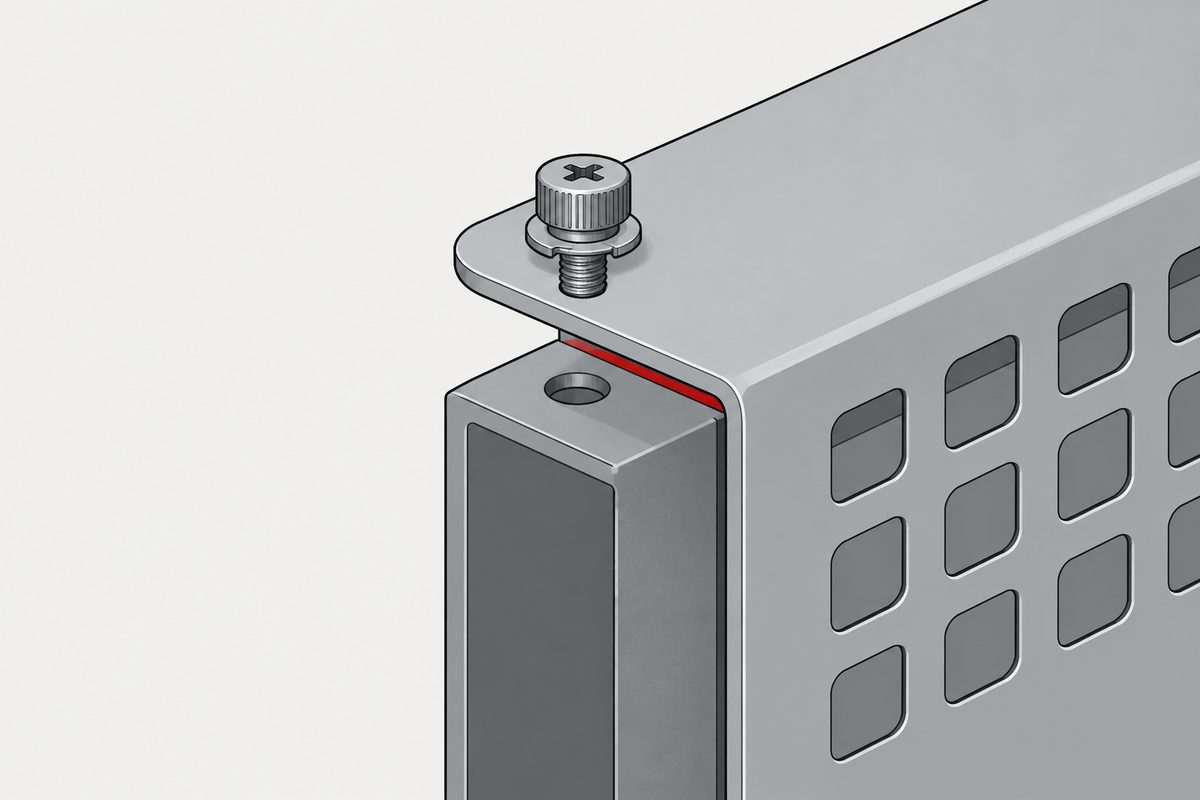
Clause 1.4.2.1, in three sentences. Fixed guards shall be fixed by systems that can be opened or removed “only with tools”. Their fixing systems shall “remain attached to the guards or to the machinery” when the guards are removed. And, where possible, guards shall be “incapable of remaining in place without their fixings”.
This page is not legal advice and this site is not a compliance adviser. Anyone who has an obligation under either instrument needs proper advice on it; what is here is a reading of one clause and a comparison of two versions of it. It did not come from a forum question. The browser tooling we normally use remains unavailable.
Which texts, and where they stand
The clause appears in two places. It is in Annex I of the 2006 machinery directive, on essential health and safety requirements relating to the design and construction of machinery. It is also in Annex III of the 2023 machinery regulation, under a heading that adds three words: machinery or related products. This is the first time this site has used European legislation.
Both texts say when they take effect, so we can report that without interpreting anything. The regulation says it shall apply from 14 January 2027, with a handful of named articles applying earlier. The article on repeals says the 2006 directive is repealed with effect from 14 January 2027. At the time of writing both documents exist and the newer one is not yet applicable, by about four and a half months. Certificates issued under the older instrument are said to remain valid until they expire.
We read the guard clause, the dates, and word counts across each whole document. We did not read the rest of either text, and we did not read any harmonised standard, so nothing here describes them.
Three sentences, three different jobs
It is worth separating them, because each closes a different route to the same failure.
The first is about the tool. A fixed guard has to be held by something that cannot be opened by hand. That is a requirement about the fastener you choose rather than how you use it, and it quietly rules out a whole family of hardware for this application: anything designed to be undone with fingers.
The second is about where the fastener goes when the guard comes off. The fixing system has to remain attached, either to the guard or to the machine. A captive fastener requirement, written into law, without the word captive appearing anywhere.
The third is the one to take away. Where possible, the guard has to be incapable of remaining in place without its fixings. Not inspected, not labelled, not recorded on a checklist. Incapable. If the screws are not in, the guard cannot sit there looking finished.
Two regulators, two opposite strategies
The previous article on this site read an airworthiness rule whose trigger is the loss of a fastener. Its answer is redundancy: where losing it would matter, two separate locking devices, so that one failing to hold is not enough.
This clause takes the opposite approach to the same problem. It does not try to make the fastener harder to lose. It tries to make the loss impossible to overlook, by removing the state in which a guard is up and unfastened at the same time.
Neither is obviously better and the two documents are not comparable in kind. What is worth keeping is that these are the two available moves against a fastener that is not there: make its absence survivable, or make its absence visible. Most assemblies attempt neither, and the second is often the cheaper of the two to design in.
Seventeen years, two changes
The 2023 instrument is a substantial rewrite. By our count it runs to about three hundred and thirty three thousand characters against about a hundred and eighty nine thousand, roughly three quarters longer than the text it replaces.
The guard clause did not join in. Set the two versions side by side and only two things have changed. Every must has become shall. And the machinery has become the machinery or related product, which is the scope change the whole instrument carries. Otherwise the three sentences are word for word identical across seventeen years. That comparison is ours.
A requirement that survives a rewrite of that size untouched is worth reading twice. It suggests nobody found a case it handled badly.
The word that never appears
We counted words across both documents in full. Neither contains the word fastener. Neither contains bolt, screw, rivet or thread. Not once, in either, across half a million characters between them.
The word they use is fixing: fifteen times in the older text, ten in the newer, mostly as fixing systems.
This is a point about vocabulary, not about coverage. The clause plainly regulates fasteners; it just declines to name any. Writing it as a fixing system means the requirement lands on whatever holds the guard on, and cannot be argued away because a particular part is a latch rather than a screw. Naming part types would have dated the clause. Whether that is why it has not needed changing is not something either text says.
The last article counted absent words too, in a federal regulation, and that page is linked rather than repeated. The two counts are doing different work: there the words were absent because the text legislates at the level of consequences; here they are absent because the text deliberately uses a functional term instead.
What this settles and what it does not
- Fixed guards shall be fixed by systems that can be opened or removed only with tools
- Their fixing systems shall remain attached to the guards or to the machinery when the guards are removed
- Where possible, guards shall be incapable of remaining in place without their fixings
- By our comparison the clause changed in exactly two respects between the two instruments: must became shall, and machinery became machinery or related product
- By our count neither document contains the words fastener, bolt, screw, rivet or thread, and both use fixing instead, which is a point about wording rather than about what is regulated
- By our count the newer text is roughly three quarters longer than the one it replaces
- The regulation states that it applies from 14 January 2027 with some articles applying earlier, and the directive is stated to be repealed with effect from the same date
- Certificates issued under the older instrument are stated to remain valid until they expire
- We read only the guard clause, the dates and the word counts, and no harmonised standard
- This page interprets nothing and is not legal or compliance advice, and makes no judgement about any particular machine or guard
The transferable idea is the third sentence. Given a joint that somebody will open and close for the rest of its life, there are two questions worth asking, and only one of them is usually asked. Is it strong enough is the first. Can it look finished while the fixings are missing is the second, and a design that answers no to that one has removed a failure that no amount of inspection reliably catches.
This is not one of the six steps. It shows up across them, or after assembly. Where the decisions that lead here were made is in specifying a screw, which sets out the order and why doing it out of order is rework.
Common questions
What does the clause require of a fixed guard?
Three things. That it is fixed by systems that can be opened or removed only with tools; that its fixing systems remain attached to the guard or to the machinery when the guard is removed; and that, where possible, the guard is incapable of remaining in place without its fixings.
Does it require captive fasteners?
It requires that the fixing systems remain attached to the guards or to the machinery when the guards are removed. The word captive does not appear in either text.
What does incapable of remaining in place mean?
This page does not interpret the clause. It reports the wording, which is that where possible the guard shall be incapable of remaining in place without its fixings.
Did the wording change between the 2006 and 2023 instruments?
By our comparison, in two respects only: must became shall, and the machinery became the machinery or related product. Otherwise the three sentences are word for word identical.
Which instrument applies now?
This page does not advise on that. The texts themselves state that the regulation applies from 14 January 2027, with some named articles applying earlier, and that the directive is repealed with effect from that same date. Anyone with an obligation should take proper advice.
Do these documents mention screws or bolts?
By our count, no. Neither contains the words fastener, bolt, screw, rivet or thread. Both use the word fixing instead, mostly as fixing systems. That is an observation about wording, not a statement that fasteners are unregulated.
How much longer is the newer text?
By our count roughly three quarters longer, about three hundred and thirty three thousand characters against about a hundred and eighty nine thousand.
Is this guidance for my machine?
No. This page is not legal advice, this site is not a compliance adviser, and no judgement is made about any particular machine or guard.
References
- Directive 2006/42/EC on machinery, Annex I, essential health and safety requirements relating to the design and construction of machinery, clause 1.4.2.1 on fixed guards
- Regulation (EU) 2023/1230 on machinery, Annex III, essential health and safety requirements relating to the design and construction of machinery or related products, clause 1.4.2.1 on fixed guards, together with the articles stating the repeal and application dates
Both texts were read as full text from the European Union’s own legal database, not from a summary or a secondary account, and both quotations were checked word by word against those files. We read the fixed guard clause and its immediate context, the articles giving the repeal and application dates, and word counts across each document in full. We did not read the rest of either instrument, and we did not read any harmonised standard, so nothing here describes their contents. This is the first time this site has used European legislation. The following are our own comparison and counts, not statements in either text: that the clause differs in exactly two respects between the two instruments; that neither document contains the words fastener, bolt, screw, rivet or thread while both use fixing; that the newer text is roughly three quarters longer; and that the application date is about four and a half months after the date of writing. The word counts are offered as an observation about vocabulary and not as a statement that fasteners are unregulated, which the clause itself disproves. An earlier page that also counted absent words in a regulation is linked rather than repeated, and the difference between the two counts is stated rather than glossed. Nothing here is legal or compliance advice, this site is not a compliance adviser, the effect and applicability of either instrument is not interpreted, and no judgement is made about any particular machine or guard; anyone with an obligation should take proper advice. This article did not come from a forum question; it comes from looking for a source family with no coverage at all, after finding that counting standard numbers alone can point at topics the site has already written about at length. No brand is named. The browser tooling this site normally uses remains unavailable.
Enquiries
If a cover or guard on your product gets opened and closed for its whole life, it is worth asking whether it can look finished with the fixings missing. Tell us what the fixing has to do and we will tell you which properties we can evidence for it.
Request a quotation
Tell us the part and the quantity. We will come back on feasibility, lead time and price.
Or email us directly sales@tigerfasteners.com