 TIGERFASTENERS
The Standard That Names Fasteners Prints Six Languages and Says Three of Them Do Not Count
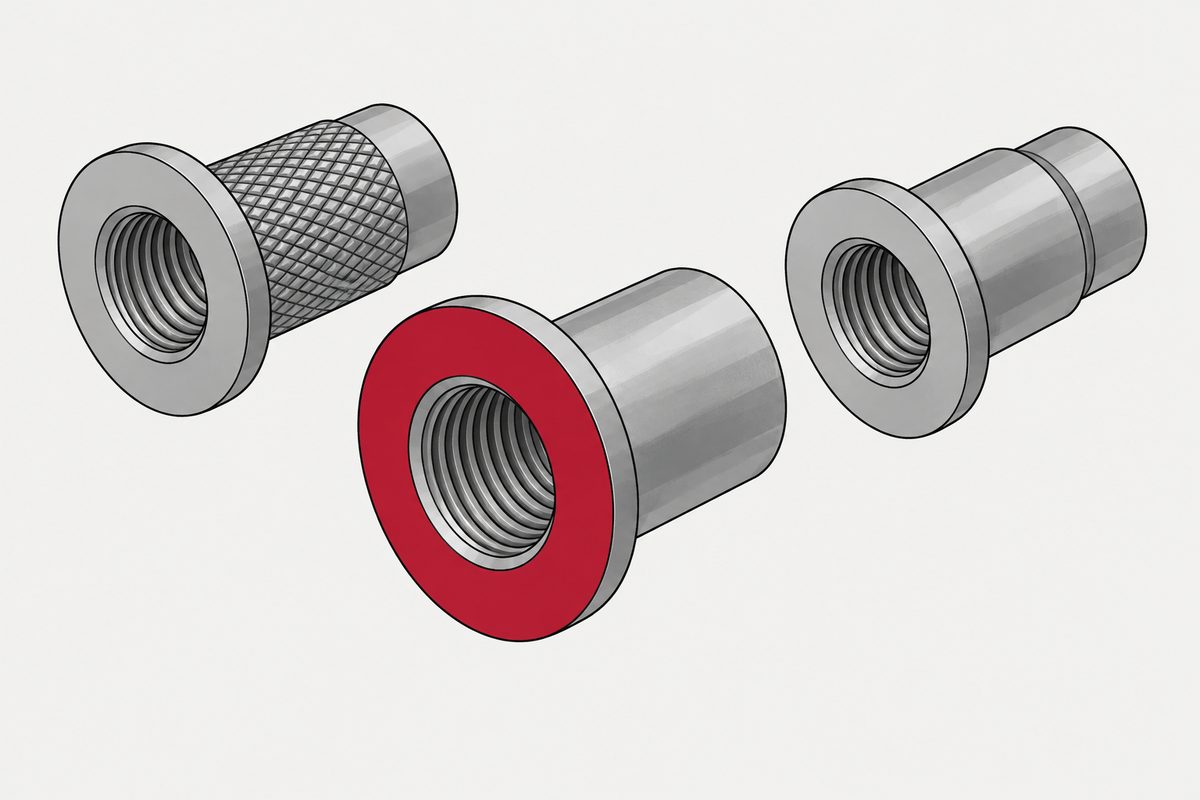
Someone posted a part they had designed, a short threaded tube with a flange at one end, and explained the problem plainly: it is so simple that off the shelf versions must exist, but they did not know what it was called in order to search for it. There is an International Standard whose entire job is that question. It runs to fifty five pages and forty one clauses, it gives every item a name in six languages, and one of the first things it does is tell you that three of those six are not ISO terms.
The note on the first page of the vocabulary standard: “The equivalent terms in German, Italian and Spanish have been included at the request of Technical Committee ISO/TC 2 and are published under the responsibility of the member bodies for Germany, F.R. (DIN), Italy (UNI) and Spain (IRANOR) respectively. However, only the terms given in the three official ISO languages (English, French and Russian) can be considered as ISO terms.”
This page does not answer what the part in that question is called. The free preview reaches the first three clauses of forty one, and we did not read the rest, so we cannot say whether a name for it appears further in. What can be reported is what the naming standard is and what it says about its own authority. The question came from a public engineering question site through its open interface, the browser tooling this site normally uses being unavailable again. We read the question and not its answers, and no username appears here.
A standard for what things are called
ISO 1891:1979 is titled Bolts, screws, nuts and accessories, Terminology and nomenclature. First edition, 15 December 1979, marked corrected and reprinted, prepared by ISO/TC 2 and circulated to member bodies in March 1977. It is priced on fifty five pages.
Its scope sentence sets out both the ambition and the limit in one breath. The standard lays down the terminology and nomenclature of bolts, screws, nuts and accessories “in English, French, Russian, German, Italian and Spanish, recommended for use unless otherwise specified in the appropriate product standard.” Six languages, and a recommendation that any product standard can override.
By our count the contents list runs to forty one numbered clauses. Clause 1 is the scope, which leaves forty clauses of vocabulary, opening at screw threads and closing at split pins. In between sit shapes of heads, forms of shank, screw and bolt ends, driving features, and then clause after clause of specific families: square head bolts, triangle head bolts, octagonal head bolts, T-head bolts, screw plugs, studs, headless screws, prevailing torque nuts, cap nuts, tab washers. Each entry is a row: a number, a diagram, and six lines of language.
Half of each row is not an ISO term
The note quoted at the top of this page is easy to skim past as housekeeping. It is not. It means that in every one of those rows, three of the six lines carry the authority of the standard and three were contributed by three national member bodies and published under their responsibility. The German, Italian and Spanish names sit in the same row, in the same typeface, and are explicitly not ISO terms.
Whether that matters depends on whether the six lines ever disagree. In the part of the standard the preview reaches, they do. Clause 3 lists shapes of heads, and its first four entries are these:
- 3.1 hexagon head
- 3.2 hexagon head with washer face, Italian testa esagonale con collarino
- 3.3 hexagon head with collar, Italian testa esagonale con collarino
- 3.4 hexagon head with flange
Two different English entries, two different drawings, one identical Italian name. The French keeps them apart, as à collerette against à embase cylindrique, and so does the Spanish, as con collarín against con collar. It is the Italian column that collides, and the Italian column is one of the three the standard has just told you are not ISO terms. The note is not ceremony. It is load bearing.
The same four entries also answer, at least for heads, a distinction the original question was circling. A collar and a flange are not the same feature here: 3.3 is cylindrical, 3.4 is cylindrical and conical, and 3.2 is a washer face, which is a third thing again.
Then the three official languages disagree
The scope contains a sentence about the illustrations: “The drawings are essentially diagrammatic, in particular those showing bolts and screws having special characteristics dealt with, for example, in clauses 18 and 19. However, it is recommended that these drawings be used as a base whenever possible.”
The French column says the same thing and points at chapitres 18 et 19. The Russian column points at clauses 19 and 20. We rendered that page at four hundred dots per inch to be sure of it, because a one digit difference is exactly the kind of thing text extraction invents. It is there.
The clause numbering itself is the same in all three contents lists, so this is not two documents numbered differently. Clause 18 is screws with captive components, clause 19 is miscellaneous bolts and screws, clause 20 is screw plugs. Which pair the sentence was meant to name is not something we can settle from the preview, and we are not claiming the Russian is the one that is wrong. What is reportable is narrower and stranger than that: in a standard that has just finished explaining that only three languages count as ISO terms, those three languages do not agree about which clauses the sentence is referring to.
It names things ISO does not standardise
The paragraph immediately before the drawings sentence is the one that reframes the whole document:
“At present, not all of the fasteners and accessories listed are covered by ISO publications. For the main part, the items have been selected from existing national standards. Also included are obsolescent types (those being used up from stock) in order that their terminology may be standardized at the same time.”
Two admissions in three sentences. The first is that the vocabulary is wider than the standards system it belongs to: some of the things named here have no ISO product standard behind them, and were taken from national standards instead. So finding a name in this list does not tell you that there is an ISO standard for the part, and a fastener can be correctly named and still not be a standardised article.
The second is deliberate and, read slowly, rather generous. Obsolescent types were put in on purpose, described as those being used up from stock, so that their terminology could be standardised at the same time. A naming standard usually looks forward. This one made room for parts on their way out, on the reasoning that people would still have to talk about them while the boxes emptied.
The pictures are diagrams, and you should still use them
The drawings sentence carries a second half that is worth separating from the clause number problem. The drawings are essentially diagrammatic, and yet it is recommended that they be used as a base whenever possible. So they are not dimensional and are not offered as geometry, but they are offered as the shape you should draw when you draw one.
That is a reasonable position for a document of this kind, and it is worth stating plainly because a diagram in a standard invites being measured. These are not for measuring. The dimensions live in the product standards the scope defers to, and the tolerance grades that go with them are a separate document again.
The vocabulary in clause 2 is also a reminder of how much older naming is than the metric system it now sits inside. The thread list includes Whitworth thread and Whitworth pipe thread alongside the ISO metric entries, and how the Whitworth angle came to be what it is has its own page here.
What this settles and what it does not
- There is a standard whose subject is what fasteners are called, in six languages, across forty clauses of vocabulary by our count
- Only English, French and Russian are ISO terms. The German, Italian and Spanish equivalents were added at the committee's request and published under the responsibility of three national member bodies
- Two different head entries share one Italian name, 3.2 and 3.3, while the English, French and Spanish keep them apart
- The three official languages disagree about a cross reference, English and French naming clauses 18 and 19 where the Russian names 19 and 20. We take no position on which is correct
- The list includes items with no ISO publication behind them, taken from national standards, and obsolescent types included on purpose
- The naming is a recommendation, applying unless the appropriate product standard specifies otherwise
- We did not read clauses 4 to 41. The free preview covers fifteen of fifty five pages, so nothing here answers what any particular part is called
The question was how to search for something when you do not know its name. There is a document built for that, and reading its first page tells you why the search is hard even with the document open: the name depends on which language you are standing in, three of the six do not officially count, and the list was never a promise that the thing has a standard behind it.
This page covers step 6, the documentation. The whole order is substrate, thread, head, drive, finish, documentation, and why doing it out of order is rework rather than a tweak is in specifying a screw.
Common questions
Is there a standard for what fasteners are called?
Yes. ISO 1891:1979, Bolts, screws, nuts and accessories, Terminology and nomenclature, first edition 15 December 1979, prepared by ISO/TC 2. By our count its contents list holds forty one numbered clauses, of which forty are vocabulary, running from screw threads to split pins.
How many languages does it use?
Six per entry: English, French, Russian, German, Italian and Spanish. A note in the scope says only the terms in the three official ISO languages, English, French and Russian, can be considered ISO terms. The German, Italian and Spanish equivalents were included at the request of the technical committee and published under the responsibility of the member bodies for Germany, Italy and Spain.
Does that distinction ever matter in practice?
In the part we could read, yes. Entries 3.2 and 3.3 are different heads with different drawings, hexagon head with washer face and hexagon head with collar, and both carry the same Italian name. The English, French and Spanish columns keep them apart.
Is a collar the same as a flange?
Not in this clause. Entry 3.3 is a hexagon head with collar, described in French as a cylindrical embase; entry 3.4 is a hexagon head with flange, described as cylindro-tronconique. Entry 3.2 is a hexagon head with washer face, which is a third entry again.
Do the official languages ever disagree with each other?
In one place we checked, they do. The sentence saying the drawings are essentially diagrammatic points at clauses 18 and 19 in English and at chapitres 18 et 19 in French, while the Russian points at clauses 19 and 20. The clause numbering in the three contents lists is the same. We take no position on which cross reference is correct and report only that they differ.
If a part is named in the standard, is there an ISO standard for it?
Not necessarily, and the scope says so. Not all of the fasteners and accessories listed are covered by ISO publications; for the main part the items were selected from existing national standards.
Why does it name obsolete parts?
On purpose. The scope states that obsolescent types, described as those being used up from stock, are included so that their terminology may be standardized at the same time.
Can I take dimensions off its drawings?
The scope says the drawings are essentially diagrammatic, so they are not offered as geometry. The same sentence recommends that they be used as a base whenever possible, which is a statement about how to draw the shape rather than how to size it.
Does this tell me what a flanged threaded tube is called?
No, and this page does not attempt it. The free preview reaches the first three clauses of forty one. Clauses 4 to 41 were not read, so nothing here rules a name in or out.
References
- ISO 1891:1979, Bolts, screws, nuts and accessories, Terminology and nomenclature, first edition, 15 December 1979, corrected and reprinted. Free preview, fifteen pages of a document priced on fifty five
- The question, on a public engineering question site. Five votes, four answers
The preview was downloaded complete and every quotation and number here was read from rendered page images, including one pass at four hundred dots per inch on the cross reference where English and French say 18 and 19 and the Russian says 19 and 20. This is the first time this site has used ISO 1891. The following are our own counts, not statements by the standard: that the contents list holds forty one numbered clauses of which forty are vocabulary; that each entry carries six language lines of which three are ISO terms; and that the preview is fifteen pages of a document priced on fifty five. Clauses 4 to 41 were not read and this page makes no claim about what is or is not named in them, including the part in the question that prompted it. We take no position on which of the three official language versions has the cross reference right, only that they differ and that the clause numbering in all three contents lists is the same. Later parts of the ISO 1891 series exist and were not read, so nothing here should be taken as a statement about the current terminology standard. No brand, catalogue or search tool is named. The Whitworth entries in clause 2 are mentioned only as items on a list; the history behind that thread is on a separate page here and is not repeated. The question came from a public engineering question site rather than the forum tooling this site normally uses, which remains unavailable. We read the question and not its answers, and no username appears here.
Enquiries
If you are holding a part and cannot name it, a photograph with two or three measured dimensions gets further with us than a search term does. Send those and we will tell you what the item is called in the standards we work to, and whether it is a standardised article at all or something that would have to be made.
Request a quotation
Tell us the part and the quantity. We will come back on feasibility, lead time and price.
Or email us directly sales@tigerfasteners.com