 TIGERFASTENERS
The wire came from somewhere else, and now origin is a question
The intuition runs: the factory is in Taiwan, so the screw is Taiwanese. Most of the time that intuition lands on the right answer.
But it gets there for the wrong reason — and when the reason is wrong the answer can be too, usually discovered when the container is already at the port.
Because origin is not a geographic fact. It is a legal determination, made by the competent authority in the destination under its own rules for the measure in question. Customs is usually involved — but not always alone: in the United States, for instance, the scope and origin questions for anti-dumping and countervailing duty can be decided by the Commerce Department, and are not bound by Customs' general origin and marking rulings.
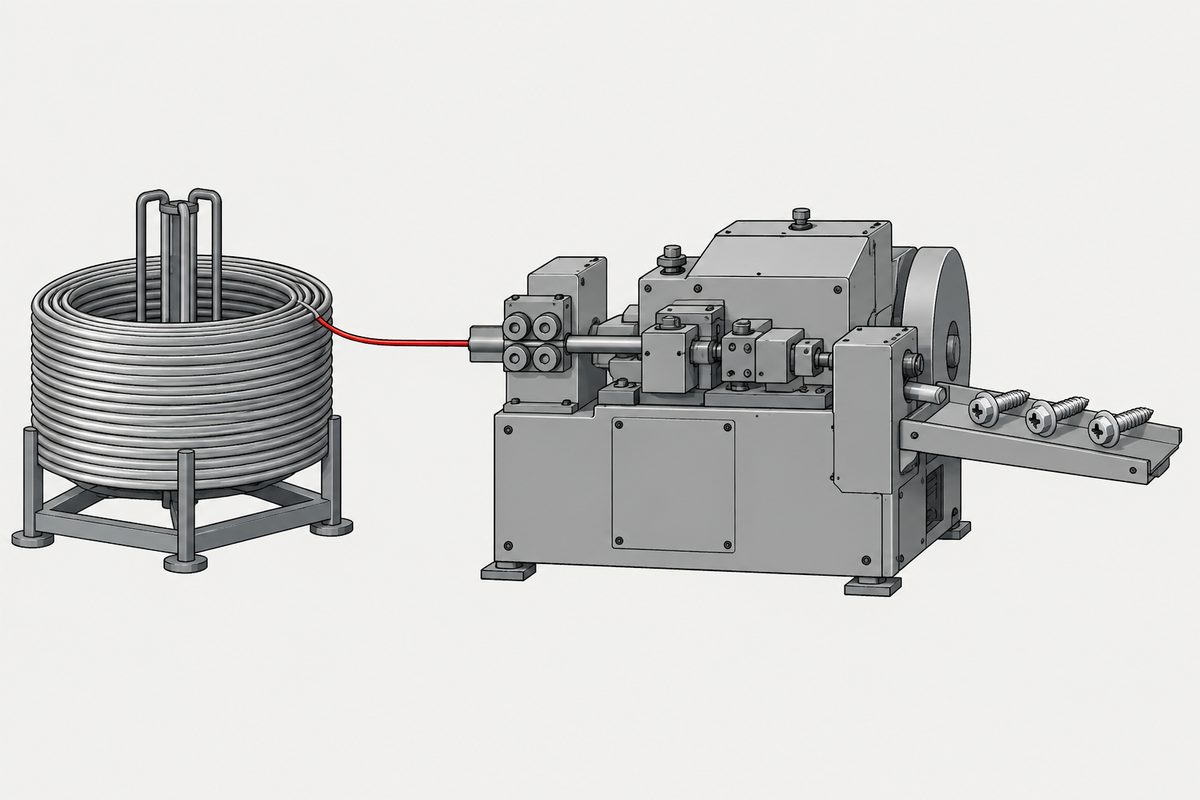
Most of the time, where it was made is the answer
When a screw goes from raw material to finished part in one country there is nothing to argue about. The question arises when the material came from somewhere else — which in this industry is common.
Then the real question is: do the operations performed in Taiwan amount to substantial transformation? Forming, thread rolling, heat treatment, finishing — are those enough to make this a new product?
There is a framework. The WTO's Agreement on Rules of Origin covers non-preferential origin. Its article listing the uses is illustrative rather than closed, and names among others most-favoured-nation treatment, anti-dumping and countervailing duties, safeguard measures, origin marking, discriminatory quantitative restrictions and tariff quotas, government procurement and trade statistics.
But the harmonisation work under that agreement remains incomplete. Major trading jurisdictions keep their own legislation and their own interpretive approach. So strictly, the same screw can be assessed differently in different destinations, and "what is the origin" is an incomplete question until you say origin for which country.
Substantial transformation: three tests, not one
Last substantial transformation is the widely used core concept — though the WTO notes not every member has enacted or applies specific non-preferential rules. How it is tested varies. Three approaches are common:
| Test | What it asks |
|---|---|
| Change in tariff classification | Does processing move the goods to a different Harmonised System heading |
| Ad valorem percentage | Does value added in the country reach a threshold |
| Specified operation | Were the named manufacturing or processing operations carried out there |
The European Union is worth being specific about, because a summary of "it uses tariff classification" is too loose. Its Union Customs Code works from last substantial, economically justified processing; a published annex sets binding product rules for listed goods, with case-by-case assessment for unlisted ones, plus separate provisions on minimal operations and on processing whose only purpose is to circumvent measures, and residual rules where the primary rule is not met.
For screws and bolts specifically — HS heading 7318 — that published primary rule is a change of tariff heading, so the tariff classification test is the one that applies to this product. That is a narrower and more useful statement than a claim about the EU system as a whole.
One point is broadly shared across systems: minor operations such as repackaging do not confer origin.
That shared point is useful because it sets a floor. "Boxed in Taiwan" and "formed, rolled and heat treated in Taiwan" are not a difference of degree on this question. They are a difference of kind.
Three things that keep getting conflated
Most of the confusion comes from treating these as one. They are not, and a single screw can carry different countries in all three.
- Country of melt and cast — where the steel was originally melted and poured. A materials traceability fact, conventionally shown on the mill test certificate. It ignores later processing.
- Country of origin — the determination about the finished article, which does take later processing into account. Non-preferential origin is one important factor in whether many duties and trade measures apply — alongside classification, customs value, any preferential origin, and the scope of the specific measure.
- The "Made in ___" mark — a labelling claim governed by its own marking rules, which differ between markets. That does not make it a free choice: US marking rules generally require the mark to reflect the legally determined origin, and a "Made in USA" claim carries its own separate standard. Additional wording such as "designed in" or "finished in" can describe other operations, provided it is not misleading.
A screw made from imported wire and formed and heat treated in Taiwan will commonly show one country for melt and cast and Taiwan for customs origin, with the marking following the destination's marking rules. The first two can legitimately differ, because they answer different questions — but do not read that as licence to put an unrelated third country on the box.
Incidentally, the point from why specifying an unstocked material raises the minimum — that a coil has to be opened for you — has a second meaning here: where that coil came from feeds into this question.
Why this belongs at the enquiry, not the arrival
It has financial consequences, and they land on the buyer.
- Anti-dumping, countervailing and safeguard measures turn on the origin of the goods and the scope of the measure, not on where the seller sits. You have to read the specific order: its product scope, which countries it covers, any exclusions, and any anti-circumvention determination. Safeguards in particular are sometimes global with country exclusions.
- In most systems the declaration is the importer's responsibility. A supplier saying "Made in Taiwan" does not transfer that.
- The timing of discovery is usually terrible — goods at the port, a line waiting, and the duty and delay both on your side.
So it belongs with price and lead time in what an enquiry has to contain, not in the incident afterwards.
What to ask the supplier for
Not "Made in Taiwan". That is a conclusion, and what you need are the facts someone can reach a conclusion from:
- The wire, asked as separate questions. "Source" is not one field: the country it was bought from, the country it shipped from, the country it was manufactured in, its own non-preferential origin, and the country of melt and cast can all differ. Ask for each rather than for a single answer.
- Which operations were performed in which country. Forming, thread rolling, heat treatment and finishing listed separately — finishing in particular is often subcontracted and may not be in the same country.
- The Harmonised System headings before and after processing. Where the destination uses the tariff classification test, those two numbers are the case.
- A written origin declaration stating its basis. Which country, and under which test that conclusion was reached.
- Material origins, values and how they were calculated — if the applicable rule uses an ad valorem threshold, or falls back to a residual rule based on which material contributes the greatest value, then costs are the case and the four items above cannot settle it on their own.
This page explains how the question is decided, not what the answer is for your shipment. Rules differ by destination and are revised. A customs broker or trade adviser can assess and file against the current rules, but they cannot substitute for the authority: where you need legal certainty, the route is a binding ruling from the customs authority itself — the EU issues Binding Origin Information, and US Customs issues binding rulings. Having the items above ready is what gives anyone something to work from, instead of a phrase to guess at.
Common questions
The factory is in Taiwan. Is the origin Taiwan?
Not automatically. Where material comes from elsewhere, the question becomes whether the Taiwanese operations amount to substantial transformation — and because WTO harmonisation is incomplete, different destinations can reach different answers.
How is substantial transformation decided?
By three common tests: change in tariff classification, ad valorem percentage, or a specified operation. The EU leans on the first. Repackaging and similar minor operations do not confer origin.
Is country of melt and cast the same as origin?
No. Melt and cast is a materials traceability fact on the certificate and ignores later processing; origin is the customs determination on the finished article and includes it.
Can buying through a third country change the origin?
Changing the seller, the invoicing party or the routing does not. Actual processing in a third country may change origin under the destination's rules — or may be pulled back into the measure by an anti-circumvention determination. Those are separate questions and both need checking.
Is "Made in Taiwan" from the supplier enough?
No, it is a conclusion. Ask for the wire source, the operations by country, the HS headings before and after, and a declaration stating its basis.
Related
- Reading a mill test certificate — where country of melt and cast appears
- What to put in a fastener enquiry — origin belongs at this stage
- Why the minimum order quantity is that number — where the coil came from matters twice
- The order in which to specify a screw — documents come last and get asked about first
Enquiries
If you need an origin declaration, tell us the destination country and we will list the wire source and the location of each operation, so your broker has something to assess. Below M6, forming, rolling and inspection are in house, so the operation list does not wait on a subcontractor's reply.
Request a quotation
Tell us the part and the quantity. We will come back on feasibility, lead time and price.
Or email us directly sales@tigerfasteners.com