 TIGERFASTENERS
The Strength Number on a Cable Tie Is Defined as a Reference Characteristic
A cable tie is a fastener sold by the bag with a number on the label, and almost nobody who buys one has read the standard behind it. There is one, it runs to five independent classification axes, and it defines that number in six words that are worth the whole page: a reference mechanical characteristic. Not a working load. Not a rating. A reference characteristic, measured with the locking mechanism engaged.
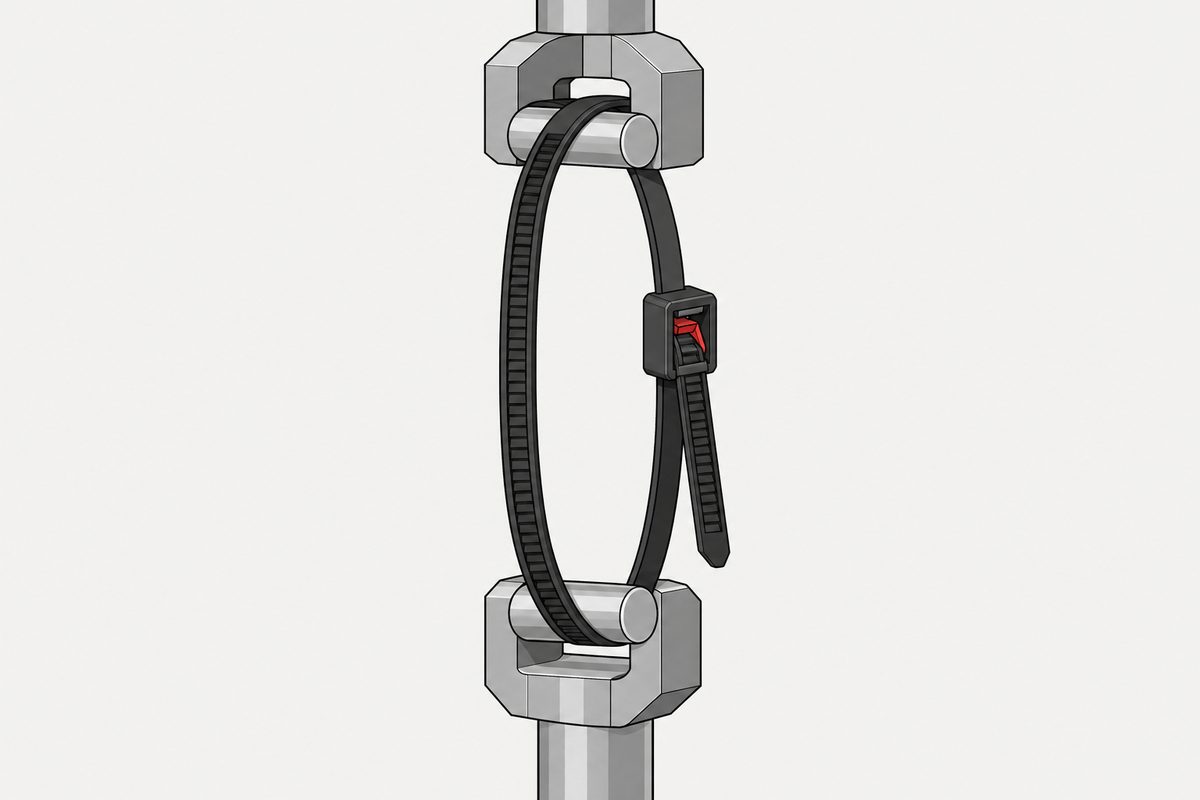
The definition, in full: “loop tensile strength: reference mechanical characteristic of a cable tie with its locking mechanism engaged.”
This page gives no load advice and does not say what any cable tie may carry. It reports how one standard defines and classifies them. It also did not come from a forum question: searches on two public question sites for cable tie strength and load returned nothing relevant, so this one starts from a gap in our own coverage, as several earlier pages have when the usual route was closed. The browser tooling this site normally uses remains unavailable.
There is a standard, and it is not small
The document is the international standard on cable ties for electrical installations, fourth edition, dated November 2022. This is the first time this site has used it, and until now the words cable tie appeared nowhere on it.
The copy we read is the commented version, which displays the changes from the previous edition inline, and the free preview covers the front matter, the contents, the scope, the normative references and the terms and definitions. The bodies of the classification, marking, construction and mechanical properties clauses were not read. Where this page describes the classification, it is reading the clause titles as the contents lists them, which reproduce them word for word.
The definition of the article itself is worth having, because it is narrower than the use: a cable tie is a “band or length of material, employing a locking device, used for bundling or tying groups of cables together, securing and/or supporting the cables.” Cables. The standard is about cables.
Five axes, and temperature is three of them
The classification clause does not sort ties into good and bad. It sorts them along independent axes, and by our count there are five.
- By material: metallic, non-metallic, or composite. A composite is one where both the metallic and non-metallic materials contribute to the determination of the loop tensile strength
- By loop tensile strength: Type 1 and Type 2, described below
- By temperature, and this one subdivides three ways: a maximum operating temperature, a minimum operating temperature, and separately a minimum temperature during installation as declared by the manufacturer
- By contribution to fire, for non-metallic and composite ties: flame propagating or non-flame propagating
- By environmental influences: resistance to ultraviolet light for non-metallic and composite components, and resistance to corrosion for metallic and composite ones
The temperature split is the one worth noticing. A tie has an operating range and, on top of it, a separate declared limit for the moment of installation. Anyone who has tried to close a nylon tie in the cold has met that distinction without knowing it had a clause number.
The normative references show what the classification costs to establish: sinusoidal vibration, ageing ovens, a needle flame test, xenon arc lamp exposure and salt spray. Those are five different laboratories worth of testing standing behind a category on a label.
Type 1 may keep half of it
Now the part that changes how the number on the bag should be read. The two strength types are titled, verbatim:
- Type 1: retains at least 50 % of declared loop tensile strength for cable ties and mechanical strength for fixing devices after test conditions
- Type 2: retains 100 % declared loop tensile strength for cable ties and mechanical strength for fixing devices after test conditions
Read those with the definition from the top of this page and the picture completes itself. The loop tensile strength is a declared value, declared by the manufacturer, and it is a reference characteristic rather than a load rating. The type then tells you how much of that declared reference survives the test conditions. A tie that keeps only half of it is not defective. It is a Type 1.
That is a familiar shape here. A figure that looks like a capacity turns out to be a declared property with a conformity class attached, the same way a grade mark on a head is a claim rather than a certificate. The number is real; what it is a number for is the part people get wrong.
The definition is also not new. The first edition, from 2006, already used the same words, reference mechanical characteristic, and already had a Type 1 and a Type 2 under different clause numbers. The 2022 edition renumbered them and added a class for integral assemblies.
The coating question, and why it is asked
One definition deserves separate attention because it shows how carefully the strength is attributed. A metallic tie carrying a thin non-metallic or organic coating counts as metallic provided the coating does not contribute to the determination of the loop tensile strength. If it does contribute, the tie is composite instead, which puts it under both the ultraviolet and the corrosion branches of the environmental axis.
And when nobody is sure which it is, the standard says what to do: “In case of doubt, as-received condition tests with and without coating can be carried out.”
That is a small, practical instruction of a kind that appears in good standards and rarely gets quoted. It also puts a boundary around the strength figure that is easy to miss: the number belongs to a specific construction, and a coating either is or is not part of what produced it. The same instinct shows up wherever a test result is being attributed precisely, including a test whose own standard says it is not an acceptance test.
What this settles and what it does not
- Cable ties have an international standard, currently in its fourth edition, dated November 2022
- Loop tensile strength is defined as a reference mechanical characteristic of a cable tie with its locking mechanism engaged, and the value is declared by the manufacturer
- Type 1 retains at least fifty percent of that declared value after test conditions; Type 2 retains one hundred percent
- Classification runs along five independent axes by our count, with temperature subdividing into maximum operating, minimum operating and a separately declared minimum for installation
- A coating changes the classification if it contributes to the loop tensile strength, and the standard offers as-received tests with and without it in case of doubt
- The definition is not new. The first edition of 2006 used the same wording and already had two types
- We read the front matter, scope, normative references and definitions only. The bodies of the classification, marking, construction and mechanical properties clauses were not read, and the classification detail here comes from the clause titles as listed in the contents
- No temperature value appears on this page, because the two tables carrying them were not read, and the North American type classifications mentioned in a note were not read either
- Nothing here says what load any cable tie may carry. The standard defines a reference characteristic, which is precisely not that
The residue is one habit worth carrying to any product sold with a number on the packet: find out what the number is a measurement of before deciding what it permits. Here the answer is printed in the definitions clause, in six words, and it says reference rather than rating.
This is not one of the six steps. It shows up across them, or after assembly. Where the decisions that lead here were made is in specifying a screw, which sets out the order and why doing it out of order is rework.
Common questions
Is there a standard for cable ties?
Yes, an international standard on cable ties for electrical installations, currently in its fourth edition dated November 2022, with a first edition from 2006.
What does the strength number on the packet mean?
The standard defines loop tensile strength as a reference mechanical characteristic of a cable tie with its locking mechanism engaged. It is a declared value, declared by the manufacturer, and the definition is not a working load or a rating.
What are Type 1 and Type 2?
Classes by how much of the declared loop tensile strength survives the test conditions. Type 1 retains at least fifty percent, Type 2 retains one hundred percent. A tie that keeps only half is not defective; it is a Type 1.
How else are cable ties classified?
By our count along five axes: material, whether metallic, non-metallic or composite; loop tensile strength type; temperature; contribution to fire, flame propagating or non-flame propagating; and environmental influences, meaning resistance to ultraviolet light and resistance to corrosion.
Is there one temperature rating or several?
Several. The classification separates a maximum operating temperature, a minimum operating temperature, and a minimum temperature during installation as declared by the manufacturer. This page quotes no temperature values, because the tables carrying them were not read.
Does a coating on a metallic tie matter?
It changes the classification. A metallic tie with a thin non-metallic or organic coating stays metallic provided the coating does not contribute to the determination of the loop tensile strength. The standard adds that in case of doubt, as-received condition tests with and without coating can be carried out.
What is a cable tie, in the standard?
A band or length of material employing a locking device, used for bundling or tying groups of cables together, securing and or supporting the cables. The defined application is cables.
So how much can I hang from one?
This page does not answer that and gives no load advice. The standard defines a reference mechanical characteristic, which is precisely not a statement of what may be hung from the tie.
References
- IEC 62275:2022, Edition 4.0, November 2022, Cable ties for electrical installations. Commented version, free preview of fourteen pages covering the front matter, contents, scope, normative references and terms and definitions
- IEC 62275:2006, first edition, read to confirm that the definition and the two types are not new
The definition of loop tensile strength was checked against a rendered image of the page it sits on. This is the first time this site has used this standard, and the words cable tie did not appear anywhere on the site before this page. The copy read is the commented version, which shows changes from the previous edition inline, and that is stated in the text rather than glossed. Only the front matter, contents, scope, normative references and terms and definitions were read. The bodies of the classification, marking, construction and mechanical properties clauses were not read, and every classification detail on this page is taken from the clause titles as the contents lists them, which reproduce them word for word. No temperature value appears here, because the two tables carrying them were not read, and the additional type classifications mentioned in a note as applying in Canada and the United States were not read either. The following are our own observations, not statements by the standard: that the classification runs along five independent axes, and that temperature subdivides three ways. This article did not come from a forum question; searches on two public question sites for cable tie strength and load returned nothing relevant, so it starts from a gap in this site’s own coverage, as several earlier pages have done when the usual route was closed. That gap was found by scanning fastener families for zero coverage, which also turned up several others. This page gives no load advice and does not say what any cable tie may carry. No brand is named. The browser tooling this site normally uses remains unavailable.
Enquiries
If a part on your bill of materials is bought by a number on the packet rather than to a specification, it is worth finding out which classes that number belongs to before it becomes a supply question. Send us the line as written and we will tell you what a conforming article would have to declare and what we could evidence against it.
Request a quotation
Tell us the part and the quantity. We will come back on feasibility, lead time and price.
Or email us directly sales@tigerfasteners.com