 TIGERFASTENERS
The Document That Tells Aircraft Mechanics Which Bolts to Use Never Says Aerospace Grade
Somebody read that an electric car was strong because it used aerospace grade bolts, found a trade article explaining that the key difference is quality, and asked the obvious question: what actually are those. Forty votes. There is a six hundred and forty six page federal document whose job is to tell aircraft mechanics which fasteners are acceptable, and the phrase does not appear in it once.
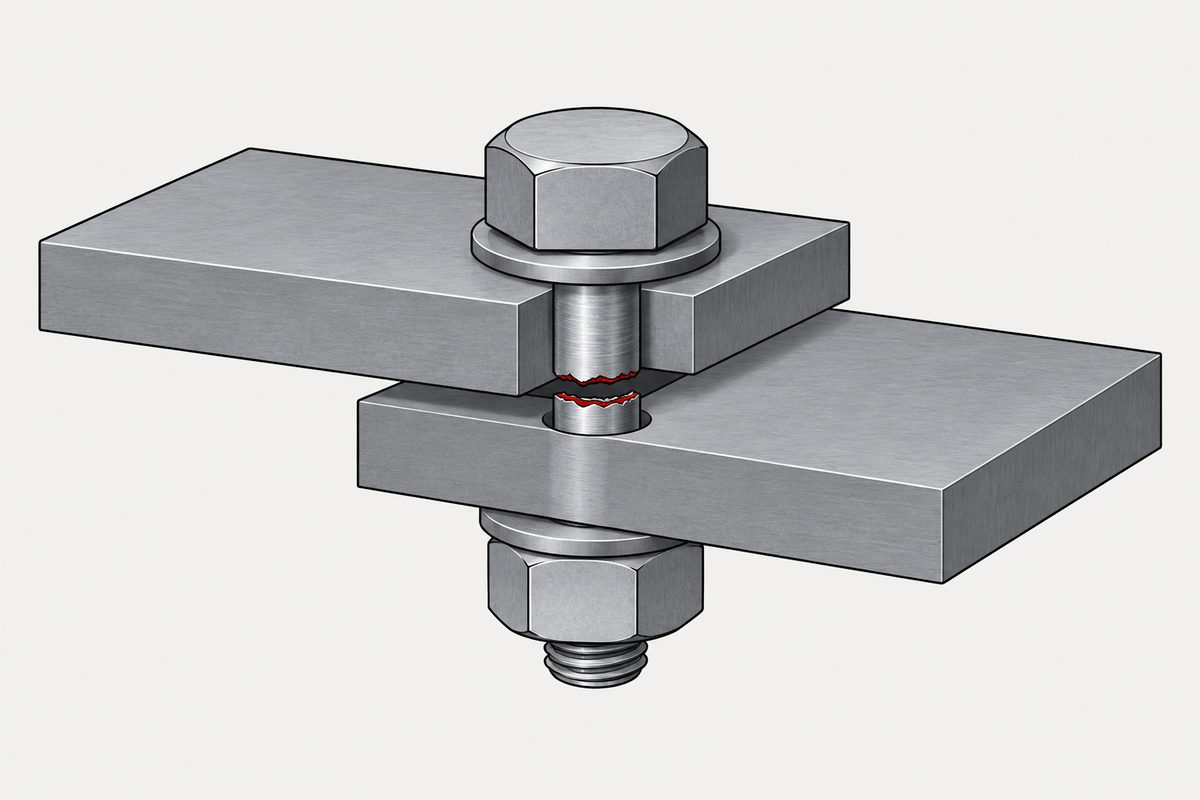
From the paragraph on identifying aircraft bolts: “Bolts with no markings are low strength.”
This page gives no aviation, maintenance or selection advice, does not diagnose the car in the original question and does not comment on the trade article quoted in it. We are not a supplier to that industry. What can be reported is what one document says, and what it counts as identifying a fastener. The question came from a public space question site through its open interface, the browser tooling this site normally uses being unavailable again. We read the question and not its answers, and no username appears here.
The phrase is not in the document
The document is a United States advisory circular on acceptable methods, techniques and practices for aircraft inspection and repair, dated 8 September 1998 with a change in 2001, running to six hundred and forty six pages. Its seventh chapter covers aircraft hardware, and the third section of that chapter covers bolts. This is the fifth time this site has read that document, and the bolts section was untouched by the previous four.
By our count the phrase aerospace grade appears in it zero times, and so does aircraft grade. The word aerospace appears sixteen times, and every one of them is inside the name of an organisation, a standard family or a document: a national standards body, a materials specification series, an engineering society division, titles about wiring and wire performance. Not once is it an adjective attached to the quality of a part.
That is a count in one document, not a proof about the language. We did not read the military handbooks, the technical orders or the industry standards it refers to, so we cannot say the phrase appears nowhere. What we can say is that the document a mechanic actually opens does not use it, and uses three other things instead.
The first thing it uses is traceability
The general paragraph opens by defining hardware as the fasteners and small items used to assemble and repair aircraft structures, and then goes straight to the criterion: “Only hardware with traceability to an approved manufacturing process or source should be used. This traceability will ensure that the hardware is at least equal to the original or properly-altered condition.”
And then the reason, which is the part worth sitting with: “Hardware that is not traceable or is improperly altered, may be substandard or counterfeit, since their physical properties cannot be substantiated.”
Read that as an answer to the original question and it inverts it. The asker wondered whether these bolts are made of stronger or lighter alloys. The document is not distinguishing strong bolts from weak ones. It is distinguishing bolts whose properties can be substantiated from bolts whose properties cannot, and it treats the second category as possibly counterfeit rather than merely inferior.
The same instinct appears elsewhere in fastener work, where a number stamped on a head is a claim rather than a certificate. Here the document goes one step further and names what happens when even the claim has no provenance behind it.
The second is approval for the specific installation
The paragraph continues: “Selection and use of fasteners are as varied as the types of aircraft; therefore, care should be taken to ensure fasteners are approved by the Federal Aviation Administration for the intended installation, repair, or replacement.”
Approval is not a property the bolt carries around. It is relative to an installation. A fastener can be entirely genuine, fully traceable and still not be approved for the place somebody wants to put it, which is a different failure mode from being weak.
The bolts paragraph then adds the sentence that most directly answers the question as asked. Most bolts used in aircraft structures are general-purpose, internal-wrenching or close-tolerance bolts from three named standard families. Then: “In certain cases, fastener manufacturers produce bolts of different dimensions or greater strength than the standard types. Such bolts are made for a particular application, and it is of extreme importance to use like bolts in replacement.”
Greater strength appears here as a reason for caution, not as a selling point. A stronger than standard bolt is described as made for a particular application, and the instruction that follows is to replace like with like. Nothing in the passage treats extra strength as generally desirable.
The third is what the head actually says
Identification comes from code markings on the bolt head, and the document is precise about what those markings mean. They generally denote the material the bolt is made of, whether it is a standard type or a special-purpose bolt, and sometimes the manufacturer. Three things, and a grade is not among them.
- Standard steel bolts are marked with either a raised dash or an asterisk
- Corrosion-resistant steel is marked by a single dash
- Aluminium alloy bolts are marked with two raised dashes
- Special-purpose bolts include high-strength, low-strength and close-tolerance types, and are normally inspected by magnetic particle methods. Typical markings include the letters SPEC, usually heat treated for strength and durability, and a manufacturer's part number stamped on the head
- Close-tolerance bolts from the national standard family are marked with either a raised or a recessed triangle
- Bolts requiring non-destructive inspection by magnetic particle methods are identified by coloured lacquer, or by head markings of a distinctive type
And in the middle of that list, the sentence quoted at the top of this page: bolts with no markings are low strength. Not unknown. Not to be treated with caution. Low strength, as a positive identification.
That is worth carrying into ordinary industrial work, where the instinct on seeing an unmarked head is usually to assume it is probably fine. In this document an absent marking is information, and the information is unfavourable.
What this settles and what it does not
- By our count the phrase aerospace grade appears zero times in the 646 page document that tells aircraft mechanics which fasteners are acceptable, and neither does aircraft grade
- The word aerospace appears sixteen times, always inside a proper name, never as a quality adjective for a part
- The stated criterion is traceability to an approved manufacturing process or source, because untraceable hardware may be substandard or counterfeit since its physical properties cannot be substantiated
- Approval is relative to the intended installation, repair or replacement, not a property the part carries
- Greater than standard strength is described as application specific, with an instruction to replace like with like
- Head markings denote material, standard or special-purpose type, and sometimes the manufacturer
- Bolts with no markings are low strength, stated as an identification rather than an uncertainty
- This is a count in one document. The military handbooks, technical orders and industry standards it refers to were not read, so nothing here shows the phrase is absent from the wider literature
- No aviation, maintenance or selection advice is given, and the vehicle in the original question is not discussed
The answer to what makes a bolt acceptable in this world turns out to have nothing to do with a grade word. It is whether somebody can show where the part came from, whether it is approved for the hole it is going into, and whether its head says what it is. A phrase that does none of those three is doing marketing rather than engineering, and the document that governs the work does not need it.
This page covers step 6, the documentation. The whole order is substrate, thread, head, drive, finish, documentation, and why doing it out of order is rework rather than a tweak is in specifying a screw.
Common questions
Is aerospace grade a real specification?
Not in the document we read. By our count the phrase appears zero times in the 646 page advisory circular that tells aircraft mechanics which fasteners are acceptable, and aircraft grade appears zero times as well. This is a count in one document, not a statement about every document in the world.
Does the word aerospace appear at all?
Sixteen times, and every occurrence is inside the name of an organisation, a standard family or a document title. It is never used as an adjective describing the quality of a part.
What does the document use instead?
Three things. Traceability to an approved manufacturing process or source. Approval by the aviation authority for the intended installation, repair or replacement. And code markings on the bolt head.
Why does traceability matter so much?
The document gives the reason directly: hardware that is not traceable or is improperly altered may be substandard or counterfeit, since its physical properties cannot be substantiated. The distinction being drawn is not strong against weak, it is provable against unprovable.
What do the head markings mean?
They generally denote the material the bolt is made of, whether it is a standard type or a special-purpose bolt, and sometimes the manufacturer. Standard steel carries a raised dash or an asterisk, corrosion-resistant steel a single dash, and aluminium alloy two raised dashes.
What does an unmarked head mean?
The document states it plainly: bolts with no markings are low strength. It is written as an identification, not as an unknown.
Are stronger than standard bolts better?
The document does not present them that way. It says manufacturers sometimes produce bolts of different dimensions or greater strength than the standard types, that such bolts are made for a particular application, and that it is of extreme importance to use like bolts in replacement.
Does a marked, traceable bolt mean it can go anywhere?
No. Approval is stated relative to the intended installation, repair or replacement, so it is a property of the pairing rather than of the part.
So what makes a bolt aerospace grade?
This page does not supply a definition, because the document does not contain one. It reports what that document requires instead, and gives no advice about selecting fasteners for any application.
References
- FAA Advisory Circular 43.13-1B, Acceptable Methods, Techniques, and Practices, Aircraft Inspection and Repair, 8 September 1998 with change 1 of 27 September 2001. Chapter 7 Section 3, paragraphs 7-34 to 7-36
- The question, on a public space question site. Forty votes, five answers
Paragraphs 7-34 to 7-36 were read from a rendered image of the printed page they occupy, and every quotation here comes from that image. This is the fifth time this site has used this document, after pages on approval, on safetying, on reusing self-locking nuts and on electrical connections. The bolts section was untouched by all four and nothing from them is repeated. Paragraph 7-37 on grip length was only partly legible in the image and nothing from it is quoted, including its figure for washer height. The following are our own counts, not statements by the document: that the phrase aerospace grade appears zero times and aircraft grade zero times in its 646 pages; that the word aerospace appears sixteen times and every occurrence sits inside a proper name; and that the three things a head marking is said to denote do not include a grade. Those counts cover this document only. The military handbooks, technical orders and industry standards it refers to were not read, so this page shows nothing about whether the phrase appears elsewhere. No aviation, maintenance, inspection or selection advice is given, the vehicle mentioned in the original question is not discussed, the trade article quoted in it is not assessed, and no brand is named. The question came from a public space question site rather than the forum tooling this site normally uses, which remains unavailable. We read the question and not its answers, and no username appears here.
Enquiries
If a specification reaching us uses a grade word that does not resolve to a document, we will ask what it is standing in for before quoting, because the thing being asked for has to be a set of properties somebody can evidence. Send the wording as written and we will tell you what we can substantiate and what would have to be named instead.
Request a quotation
Tell us the part and the quantity. We will come back on feasibility, lead time and price.
Or email us directly sales@tigerfasteners.com